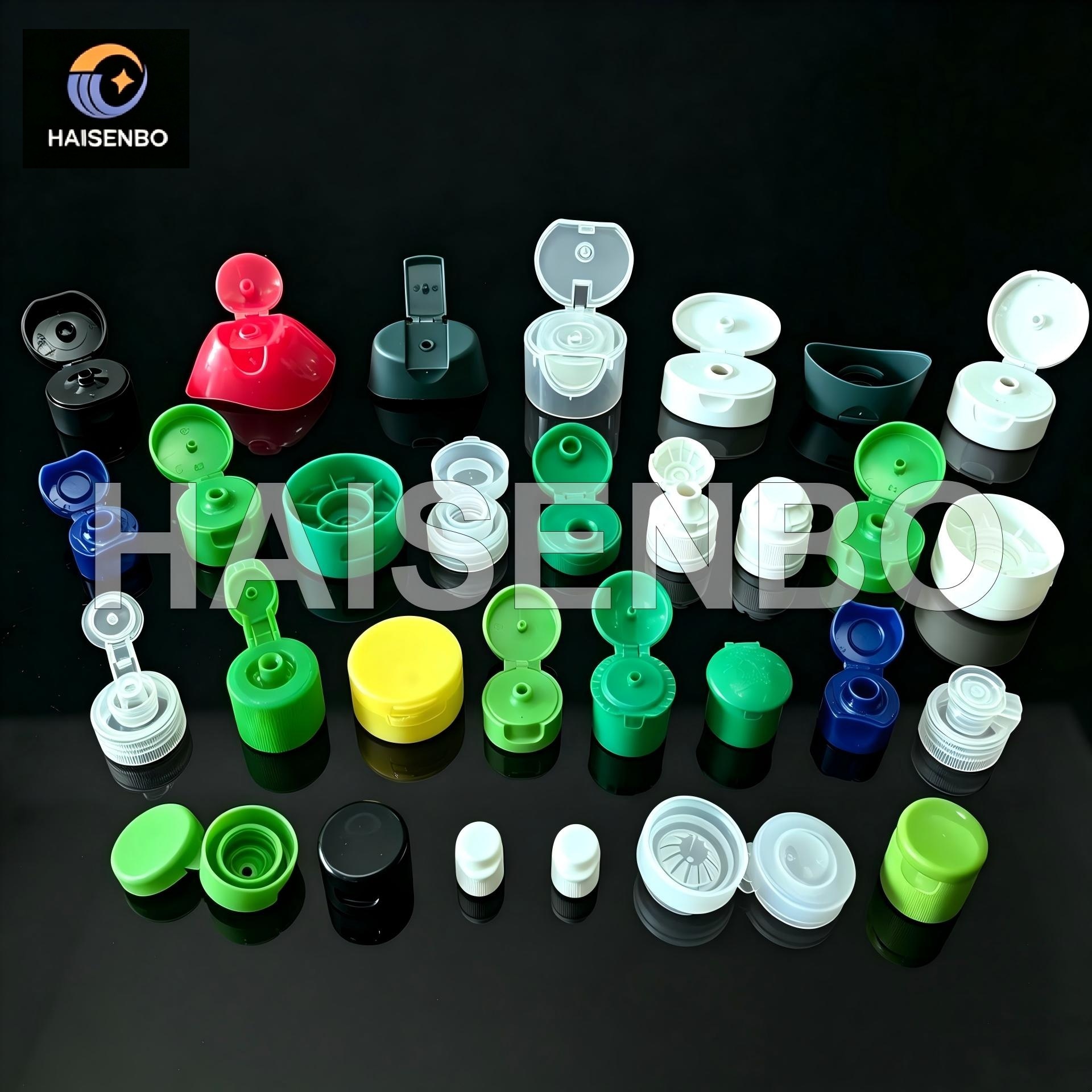
A flip top cap looks like a small convenience — until the living hinge snaps off in a customer's hand, or the lid won't stay shut on the shelf. The hinge is the whole product, and it lives or dies by how the high precision injection mold behind it is built. This guide covers the four decisions that decide whether your flip top caps survive millions of open-close cycles: living hinge design, gate type, cavity count and mold steel.
1. The Living Hinge: Where Flip Top Caps Succeed or Fail
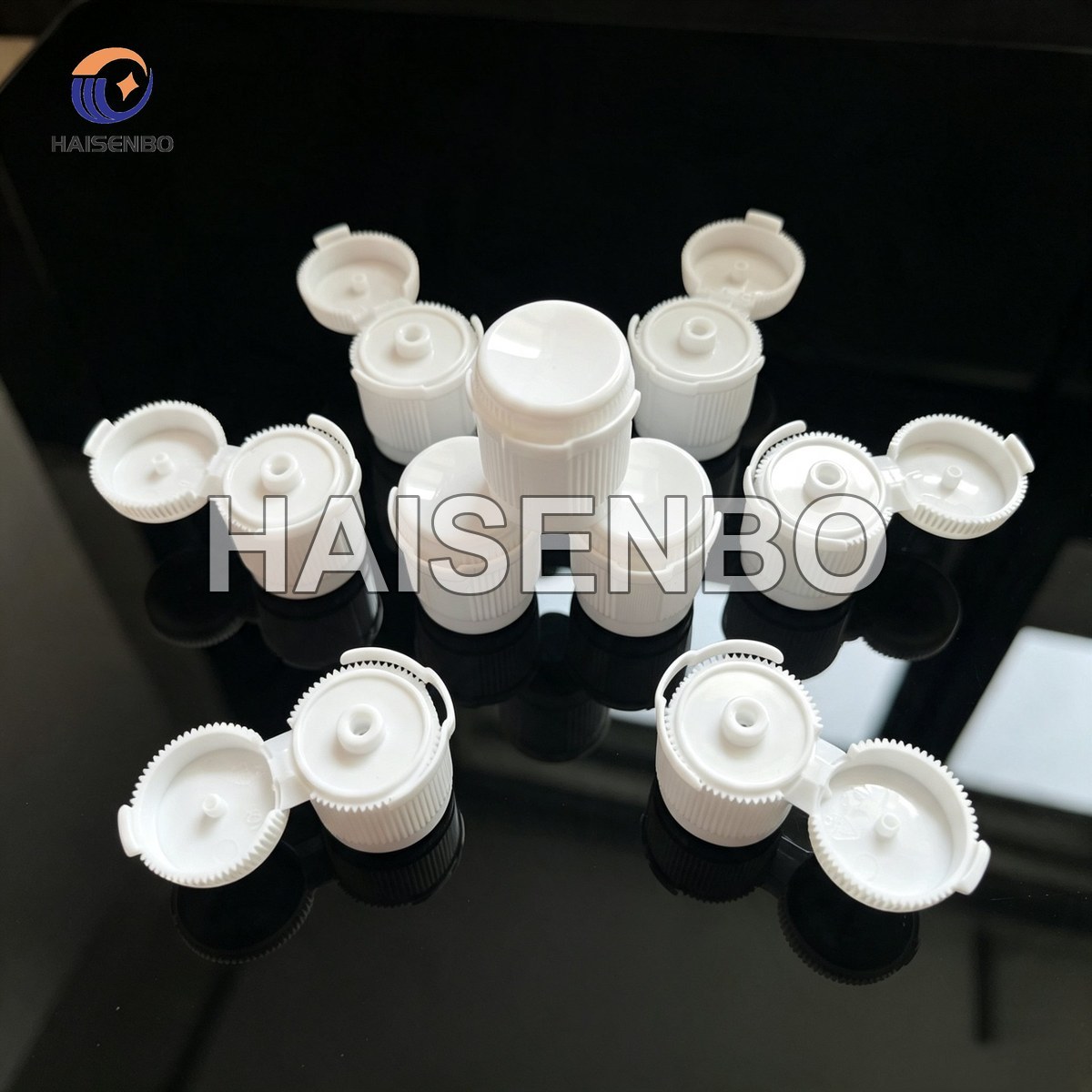
The living hinge is the thin, flexible web that connects the lid to the base of a flip top cap. It is molded in one shot with the rest of the part — no pin, no spring. Its job is to flex thousands of times without tearing or hardening. This is the single most common point of failure in a cheap flip top cap mold, and the hardest thing to get right.
What makes a hinge last:
- Molecular orientation — the melt must flow lengthwise through the hinge so the polymer chains align along the bend. Gate position and fill speed decide this.
- Geometry — a properly profiled hinge (typically 0.25–0.5 mm thick with a rounded cross-section) flexes without stress concentration.
- Resin — PP (polypropylene) is the standard for living hinges; it stays flexible far longer than PE or ABS.
- Post-mold conditioning — a brief flexing cycle "sets" the hinge and multiplies its life.
Buyer tip: ask for a hinge-life figure (cycles to failure) on the actual tool, not a material datasheet number. A good flip top cap mold delivers 1,000,000+ open-close cycles. If a supplier cannot state a number, the hinge is the risk.
2. Gate Type & Hot Runner: Hinge Orientation Starts at the Gate
Because hinge life depends on molecular orientation, where and how the melt enters the cavity matters more than on a standard screw cap. A high precision injection mold for flip tops uses a balanced hot-runner manifold so every cavity fills the same way, with the gate placed to drive flow along the hinge axis.
| Gate approach | Result | Best for |
|---|---|---|
| Balanced valve-gate hot runner, hinge-aligned | Oriented hinge, flash-free, even fill | High-volume dispensing / shampoo caps |
| Open hot runner | Good quality, simpler maintenance | Standard flip tops, R&D |
| Cold runner (3-plate) | Lower tool cost, sprue to recycle | Low-volume, custom shapes |
With optimized cooling and a hinge-aware gate, our flip top cap molds reach 8–14 second cycle times on high-output lines. If a supplier cannot tell you the gate position relative to the hinge — or worse, puts a gate across the hinge — treat it as a red flag. That is exactly where brittle, short-lived hinges come from.
3. Cavity Count: Match the Hinge Volume to Your Line
Cavity count sets how many caps you make per cycle. Flip top caps are a high-volume dispensing product, so they often run on denser tools — but only when your upstream drying, machine tonnage and cooling water can support it.
| Production profile | Typical cavities | Typical use |
|---|---|---|
| Sampling / R&D | 8 – 16 | Prototype dispensing caps |
| Regional personal-care brand | 24 – 48 | Shampoo, lotion, detergent |
| National FMCG lines | 64 – 96 | High-speed personal care & food |
Our flip top cap molds run from compact 8-cavity development tools up to 96-cavity high-speed lines on one proven platform — screw caps, flip tops, dispensing caps and tamper-evident closures alike. A multi-cavity injection mold only pays off when your line is ready for it; we size the tool to your real output rather than a sales number.
Rule of thumb: pick the smallest cavity count that meets your required output with ~15% headroom. Over-cavitating is the #1 reason a buyer ends up with a mold their machine cannot run efficiently.
4. Material: Resin and Mold Steel
Two "materials" decide a flip top cap program — the plastic you mold and the steel your mold is cut from.
Cap resin
Most flip tops are PP (sometimes PP/PE blends for soft-touch). The mold must handle the resin's flow and shrinkage and keep gate vestige minimal so the lid seats cleanly — which is why a balanced hot runner and polished, wear-resistant steel matter more than people expect.
Mold steel
This is where cheap tools and high precision injection molds diverge. Low-cost molds use general-purpose steel that wears and corrodes; thread and hinge cores drift out of tolerance within months. We machine cores and cavities from S136H / 2344, nitride-harden the wear surfaces, and use beryllium-copper inserts where heat dissipation matters.
| Component | Typical steel | Why it matters |
|---|---|---|
| Cavity & hinge core | S136H / 2344 | Wear & corrosion resistance, polishability |
| Slide & wear parts | Nitrided / beryllium copper | Friction, heat dissipation |
| Structural plates | P20 / 4140 | Stability under clamp force |
Result: our flip top cap molds are rated for 5,000,000+ shots — the difference between a tool you replace and a tool you rely on for years of production.

5. A Quick Buyer's Checklist
- Hinge first: demand a written cycle-life figure and ask where the gate sits relative to the hinge.
- Gate type: confirm valve- or open-gate hot runner with cavity balance.
- Cavity count: size to real output + 15% headroom.
- Steel grade: insist on S136H / 2344 for hinge and thread cores.
- Resin: confirm PP grade and any soft-touch blend requirement.
- Support: pick a maker with trial reports, spare cores and after-sales.
With 30+ years and 10,000+ molds delivered to 60+ countries, Haisenbo builds flip top cap molds and high precision injection molds as production tools — not catalogue parts. See our factory or browse all products.
Choosing well up front is cheaper than recalling a brittle-hinge cap program later. If you want a second opinion on cavity count, gate position or steel for your specific flip top closure, reach out for a free quote — our engineers usually respond within 24 hours.